
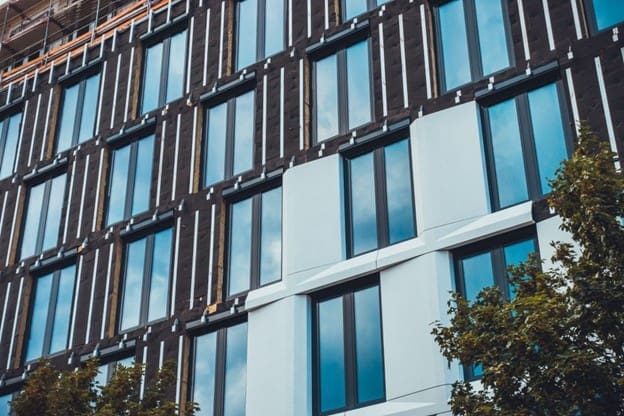
R-seal® commercial building insulation is the most reliable way to slow heat transfer through exterior walls, cutting HVAC strain by sealing weak points where energy quietly escapes.
Energy costs do not rise because your building suddenly got bigger. They rise because small wall losses add up day after day from drafty corners, warm and cold zones, to moisture that shows up as condensation when the envelope can’t hold steady. Most of it stays hidden until bills and comfort complaints make it obvious.
In this blog, we will walk through what smarter insulation looks like today, why older approaches underperform in real conditions, and how owners and builders can make commercial building insulation decisions that protect long-term operating costs and comfort.
Where Energy Loss Really Happens in Wall Systems
Most wall heat loss does not come from one obvious failure. It builds through small pathways that often go unnoticed during construction. Effective commercial building insulation has to be evaluated as a complete system, not just a material choice.
Metal framing can act as a thermal bridge, carrying heat straight through the wall even when insulation is present. Gaps at joints, compressed insulation around fasteners, and unsealed seams further reduce performance over time.
Air leakage compounds the problem by pulling moisture into the wall assembly. That trapped moisture increases condensation risk and slowly undermines durability.
That’s why steel building insulation services focus on continuity, sealing, and consistent performance in real operating conditions.
Why Traditional Steel Building Insulation Falls Short
In many steel buildings, insulation is treated as a fill step instead of a performance system. Coverage can look complete at a glance, yet still leave gaps where layers break at seams, girts, and transitions.
Installation is often labor-heavy, which means results depend on crew consistency and site conditions. Small misses during install tend to stay hidden until energy use or comfort issues surface.
Over time, compression, settling, or disturbed areas around penetrations reduce effectiveness. That performance drift leads to callbacks and ongoing maintenance. Strong steel building insulation services focus on continuity and repeatable results, not just adding more material.
R-seal® Offers A Smarter Way to Seal the Building Envelope
A smarter approach is to move beyond “filled cavities” and aim for continuous coverage that stays consistent across framing, corners, and transitions. When insulation works as an unbroken layer, it limits thermal bridging, reduces uncontrolled air movement, and helps the wall assembly hold a steadier interior temperature.
Many teams choose R seal building insulation because it is designed for cleaner continuity and tighter detailing at the seams. The result is insulation that performs more like a system, not a patchwork.
With fewer field variables and more repeatable installation steps, crews can work faster while protecting long-term thermal performance. That is the practical advantage of an R seal building envelope system.
Stop Paying for Wall Losses Year After Year
The best long-term savings come from design-forward choices that keep wall performance steady through real seasons, not just on paper.
If you want commercial building insulation evaluated as a complete system, Envo Solutions brings practical guidance, envelope-level thinking, and jobsite-proven experience to the discussion. Reach out to request R-Seal quotes or schedule a design conversation around your wall assembly, timelines, and performance goals. A short review now can prevent years of energy drift, condensation headaches, and comfort complaints later.