
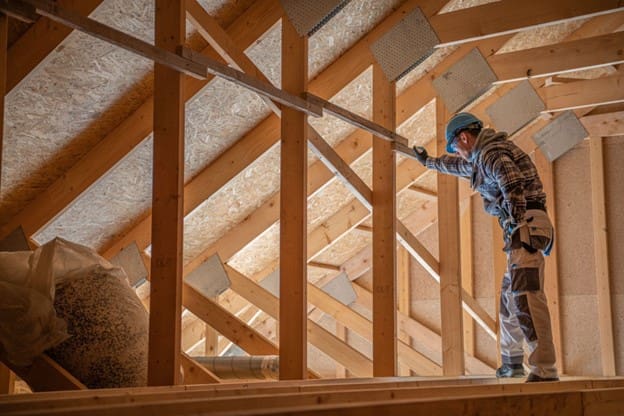
Commercial buildings need more than a strong structure and attractive exterior. The building envelope plays an important role in controlling indoor temperatures, managing energy use, limiting air movement, and supporting long-term building performance. Commercial building insulation is one of the key components of that envelope.
The right insulation system can help reduce unwanted heat transfer between the interior and exterior of a building while supporting more consistent indoor temperatures. It can also contribute to moisture management, acoustic performance, and the fire performance requirements of the overall wall or roof assembly.
For building owners, architects, contractors, and developers, choosing insulation is therefore not simply about selecting a material. It involves considering the building design, climate, construction method, energy requirements, air barrier strategy, moisture control, and applicable codes.
In this guide, we explain how commercial building insulation works, the major insulation options, its role in energy efficiency and fire safety, and what to consider when planning a new construction or insulation upgrade.
What Is Commercial Building Insulation?
Commercial building insulation refers to materials and systems installed within or around a building’s walls, roof, ceilings, floors, and other parts of the building envelope to help control heat transfer.
Unlike residential applications, commercial buildings often have larger wall and roof areas, complex structural systems, metal framing, multiple penetrations, and specialized envelope requirements. This makes proper insulation design and installation particularly important.
Depending on the project, commercial insulation may include:
- Rigid insulation panels
- Fiberglass insulation
- Mineral wool insulation
- Spray foam insulation
- Batt or blanket insulation
- Continuous insulation systems
- Insulation integrated with air and moisture control strategies
The appropriate solution depends on the building type, construction system, performance requirements, and project specifications.
Why Commercial Building Insulation Matters
A poorly insulated building envelope can allow unwanted heat to move through walls and roofs. Air leakage and thermal bridging can further affect the performance of the building.
Proper insulation helps create a more controlled thermal boundary between conditioned interior spaces and the outdoor environment.
The U.S. Department of Energy and building-industry guidance recognize exterior insulation and air-sealing as important strategies for reducing unwanted heat transfer and improving building energy performance.
For commercial properties, these improvements can affect several areas of building performance.
Improved Energy Efficiency
One of the primary reasons to invest in commercial building insulation is to improve thermal performance.
Insulation helps slow the movement of heat through the building envelope. During cold weather, it helps reduce heat loss from conditioned spaces. During warmer weather, it can help limit heat gain.
When insulation is properly integrated with the rest of the building envelope, it can help HVAC systems maintain indoor conditions more efficiently.
Continuous insulation can be particularly useful because it provides an insulation layer that extends across structural members, helping reduce thermal bridging compared with insulation that only occupies individual cavities.
More Consistent Indoor Temperatures
Temperature differences between rooms can create uncomfortable conditions for employees, customers, tenants, and visitors.
A properly designed insulation system can help create a more consistent thermal environment by reducing uncontrolled heat transfer through exterior walls and roofs.
This can be especially important in large commercial buildings where different areas may have different heating and cooling requirements.
Reduced Air Leakage
Insulation and air control are related but are not exactly the same thing.
An insulation material provides thermal resistance, while an air barrier helps control uncontrolled movement of air through the building envelope. A high-performing commercial building should consider both.
The Insulation Institute notes that minimizing air infiltration depends on having an effective air barrier system, not simply on the type of insulation used.
This is why insulation should be considered as part of a complete building-envelope strategy rather than as an isolated product.
How Commercial Building Insulation Supports Fire Safety
Fire safety is another important consideration when designing a commercial building envelope.
However, it is important to understand that insulation itself does not automatically make a building fire-safe. Fire performance depends on the specific insulation material, wall or roof assembly, installation method, fire-rated components, and applicable building-code requirements.
Some insulation materials, such as mineral wool, are commonly selected for applications where fire resistance is an important consideration. Other insulation products may be incorporated into tested or approved assemblies that meet specific fire-performance requirements.
For this reason, insulation should always be selected according to the requirements of the complete assembly.
Fire-Rated Assemblies and Building Design
Commercial buildings may require different levels of fire performance depending on occupancy, construction type, building height, location, and other factors.
Architects and contractors should review the applicable building codes and tested assembly requirements before selecting insulation materials.
The goal is not simply to choose an insulation product with a particular characteristic. The entire wall, roof, or floor assembly must be designed and installed according to the applicable requirements.
Why Proper Installation Matters for Fire Safety
Installation quality can affect the performance of an insulation system.
Gaps, incorrect fastening, unapproved materials, missing fire-stopping, or changes to a tested assembly can affect how the completed building system performs.
For commercial construction, insulation should therefore be installed according to the manufacturer’s requirements, project specifications, and applicable code provisions.
Types of Commercial Building Insulation
Commercial projects can use several different insulation materials and system designs. Each has different characteristics and applications.
Rigid Board Insulation
Rigid insulation panels are commonly used on commercial exterior walls and roofs.
They can provide a continuous insulation layer and are available in different thicknesses and performance levels. Some rigid systems are designed to integrate with air and moisture control strategies as part of the building envelope.
ENVO Solutions offers R-Seal rigid envelope insulation panels in multiple thicknesses for commercial and industrial applications.
Fiberglass Batt and Blanket Insulation
Fiberglass is widely used in commercial construction and can be installed in wall cavities, roofs, and other building assemblies.
Commercial fiberglass insulation is available in different R-values, thicknesses, and configurations. Proper installation is important to ensure the insulation fits the intended cavity and meets the project’s performance requirements.
Mineral Wool Insulation
Mineral wool is another option used in commercial wall and building-envelope applications.
It can provide thermal and acoustic performance and may be selected where fire-performance characteristics are important to the overall assembly.
The specific product and installation method should always be selected according to the project’s design and code requirements.
Spray Foam Insulation
Spray foam can be used in certain commercial applications to provide thermal insulation and help address air leakage.
Its suitability depends on the building assembly, required performance, installation conditions, fire requirements, and manufacturer’s specifications.
Continuous Insulation for Commercial Buildings
Continuous insulation is an important strategy for improving the performance of commercial exterior walls.
Instead of placing insulation only between structural members, continuous insulation is installed continuously across the structural elements, with limited penetrations for fasteners and service openings.
This approach can help reduce thermal bridging and create a more consistent thermal layer across the exterior wall assembly.
For metal buildings and other commercial structures, continuous insulation can be especially valuable because structural framing can create paths for heat transfer.
ENVO Solutions’ R-Seal insulation system is designed for commercial, industrial, and agricultural buildings and can be used as part of a continuous building-envelope strategy.
Commercial Building Insulation for Metal Buildings
Metal buildings have specific insulation considerations because steel framing and metal components can conduct heat efficiently.
A properly designed insulation system can help address thermal performance while working with the building’s structural and cladding systems.
Commercial metal-building insulation may be used for:
- Exterior walls
- Roof systems
- Metal framing assemblies
- New construction
- Retrofit projects
- Industrial facilities
- Warehouses
- Agricultural buildings
- Commercial facilities
The insulation system should be selected according to the building design, climate, energy requirements, and installation details.
Moisture and Building Envelope Performance
Insulation is only one part of protecting a commercial building from moisture-related problems.
A well-designed building envelope should also consider water-resistive barriers, flashing, drainage, vapor control, air barriers, joints, penetrations, and exterior cladding.
Improperly designed or installed envelope systems can allow moisture to enter areas where it can create long-term problems.
This is why commercial building insulation should be planned together with the rest of the building-envelope system.
Choosing the Right Commercial Insulation System
There is no single insulation solution that is ideal for every commercial building.
Before selecting a product or system, project teams should consider:
Building Type
A warehouse, office building, school, industrial facility, agricultural building, and retail property can have very different insulation requirements.
Wall and Roof Construction
The existing or planned structural system affects how insulation can be installed and how it should interact with framing, sheathing, cladding, roofing, and other components.
Required R-Value
The required thermal resistance depends on the building design, climate zone, assembly, and applicable energy requirements.
Project teams should verify the required R-value rather than selecting insulation based only on thickness.
Air and Moisture Control
The insulation system should work with the building’s air and moisture control strategy.
Fire Performance
Where fire-rated assemblies or specific fire-performance requirements apply, the complete assembly should be evaluated according to applicable code and testing requirements.
Installation and Project Schedule
The selected system should also fit the project’s construction sequence, labor requirements, material availability, and schedule.
New Construction vs. Commercial Insulation Upgrades
Commercial building insulation can be incorporated into both new construction and renovation projects.
New Commercial Construction
New construction provides an opportunity to plan the building envelope before construction begins.
Architects, engineers, builders, and owners can evaluate insulation, air barriers, thermal bridges, moisture control, and cladding attachment as part of the overall design.
Early planning can help prevent insulation conflicts and make installation more efficient.
Existing Building Upgrades
Older commercial buildings may have outdated insulation, insufficient thermal performance, air leakage, or areas where insulation has been damaged or compromised.
Before upgrading an existing building, the current wall and roof assemblies should be evaluated.
An insulation upgrade may involve adding insulation, replacing an existing system, improving air sealing, or redesigning portions of the building envelope.
Common Commercial Insulation Mistakes to Avoid
Even high-performance insulation can underperform if it is poorly designed or installed.
Common issues include:
- Selecting insulation without considering the complete wall or roof assembly
- Using the wrong R-value for the application
- Leaving gaps between insulation sections
- Ignoring thermal bridging
- Failing to coordinate insulation with air barriers
- Overlooking moisture management
- Modifying tested assemblies without proper evaluation
- Failing to follow manufacturer installation requirements
- Choosing materials without considering project-specific fire requirements
The Insulation Institute recommends verifying the appropriate R-value and other project requirements before installation and emphasizes the importance of an effective air barrier system.
Why Professional Commercial Insulation Planning Matters
Commercial insulation projects involve more than installing material on a wall or roof.
The insulation needs to work with the structural system, exterior cladding, air barrier, moisture-control strategy, mechanical systems, and project specifications.
ENVO Solutions works with building owners, architects, builders, contractors, and erectors to help evaluate insulation systems and project requirements.
ENVO can support projects with system selection, proposals, R-Seal drawings, product information, project coordination, installation training, takeoffs, and delivery support.
This project-focused approach helps construction teams evaluate insulation as part of the complete building envelope rather than as an isolated material.
Improve Your Commercial Building’s Energy and Fire Performance
Commercial building insulation can play an important role in energy efficiency, indoor comfort, building-envelope performance, and fire-safety planning.
The right solution depends on the building type, construction system, climate, required R-value, air and moisture control strategy, and applicable building codes.
For projects using continuous or rigid insulation, ENVO Solutions provides R-Seal systems designed for commercial, industrial, and agricultural applications. The available R-Seal panel options include 2-inch, 2.6-inch, 3-inch, 4-inch, and 5-inch configurations.
Get Expert Help With Your Commercial Building Insulation Project
Planning a new commercial building or upgrading an existing facility? ENVO Solutions can help you evaluate insulation options for your project.
From product selection and project takeoffs to pricing, drawings, delivery coordination, and installation support, ENVO works with your construction team to help keep the insulation portion of the project moving efficiently.
Whether you need commercial building insulation for a new facility, a metal building, an industrial project, or a commercial retrofit, the right system can help support long-term building performance.
Contact ENVO Solutions today to discuss your project, request product information, or get a commercial insulation quote.
Frequently Asked Questions About Commercial Building Insulation
What is commercial building insulation?
Commercial building insulation consists of materials and systems used in walls, roofs, floors, and other parts of a commercial building to reduce heat transfer and improve building-envelope performance.
What is the best insulation for a commercial building?
There is no single best insulation for every commercial building. The appropriate option depends on the building design, wall or roof assembly, R-value requirements, moisture conditions, fire requirements, installation method, and project specifications.
Does commercial insulation help reduce energy use?
Properly designed insulation can reduce heat transfer through the building envelope, which can help reduce the heating and cooling demand of a commercial facility.
What is continuous insulation?
Continuous insulation is an insulation layer installed continuously across structural members rather than only between framing cavities. It can help reduce thermal bridging and improve the thermal performance of exterior wall assemblies.
Is commercial insulation important for fire safety?
Insulation can be part of a building assembly designed to meet fire-performance requirements, but fire safety depends on the complete tested or code-compliant assembly. The appropriate materials and installation methods should be determined based on the project’s requirements.
Can insulation be added to an existing commercial building?
Yes. Existing commercial buildings can often be evaluated for insulation upgrades. The appropriate approach depends on the existing wall and roof construction, condition of the building envelope, available space, and project requirements.
What insulation does ENVO Solutions provide?
ENVO Solutions provides commercial insulation solutions including R-Seal rigid envelope insulation systems and other insulation products for commercial, industrial, and agricultural applications.
Can ENVO Solutions help with my commercial insulation project?
Yes. ENVO Solutions works with owners, architects, builders, contractors, and erectors and can provide project support including product selection, takeoffs, proposals, drawings, delivery coordination, and installation support.
Conclusion
Commercial building insulation is an important part of creating an energy-efficient, comfortable, durable, and properly designed building envelope. From thermal performance and air control to moisture management and fire-safety considerations, insulation should be selected and installed as part of the complete building system.
By evaluating the building design, insulation type, R-value, continuous insulation requirements, air barrier, moisture control, and applicable fire and energy codes, project teams can make more informed decisions about commercial insulation.
With the right products and project support, insulation can become an important part of a commercial building’s long-term performance strategy.
Ready to discuss your commercial insulation project? Contact ENVO Solutions for product information, project assistance, takeoffs, pricing, and delivery support.